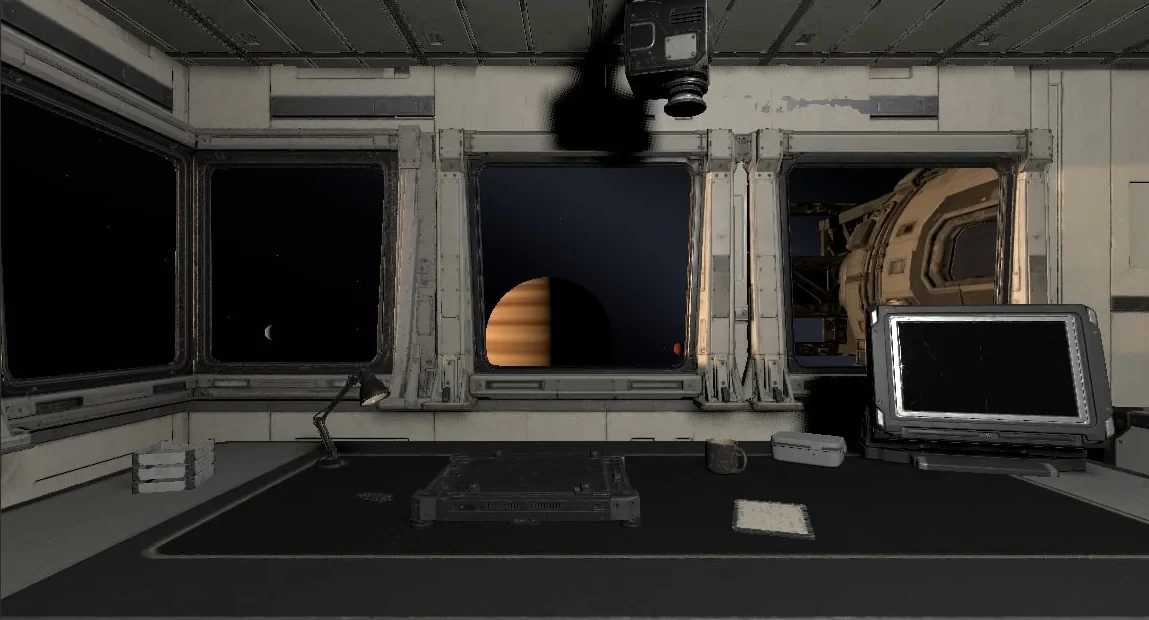
INSPECT, INVESTIGATE, DECIDE
Examine objects, take measurements, search station archives, verify claims and reconstruct provenance before choosing a disposition.
Station A / Deck 97 / Night Intake
A civilization is what it refuses to throw away.
Inspect disputed objects. Reconstruct their histories. Decide what civilization keeps.
Independent solo game made in Quebec
Current in-engine development capture / imagery and presentation subject to change
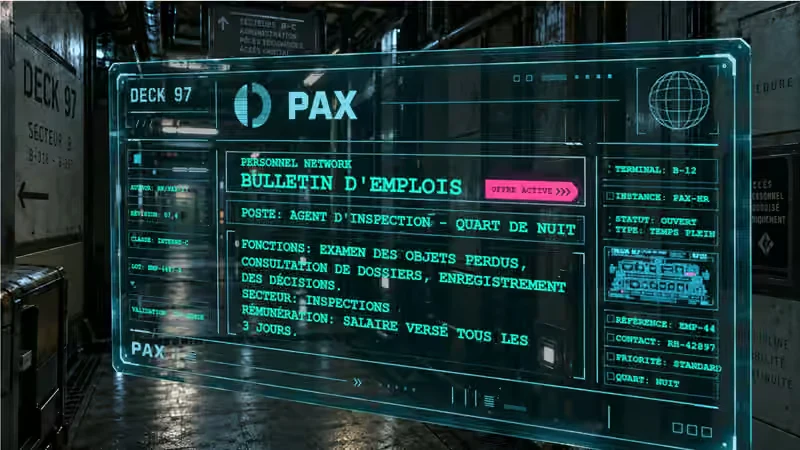
THE WORK. THE MONTH. THE COST.
Deck 97 is a narrative inspection game set aboard an aging orbital station. Work your shifts, investigate disputed objects, manage fatigue, buy food, move through the station, and try to make rent. Every decision costs time, money, or energy — and the station keeps moving whether you are ready or not.
Examine objects, take measurements, search station archives, verify claims and reconstruct provenance before choosing a disposition.
Return, hold, archive, auction, dispose or escalate when evidence is incomplete, contradictory, damaged, forged or missing.
Get paid every three shifts while managing food, fatigue, transit, errands and the rent waiting at the end of the run.
Go home, rest, buy what you need, help someone, follow a problem — or push yourself through one more task.
Multi-day stories, generated cases, schedules and consequences continue whether you participate in them or not.
01 / THE OBJECT
At first, it may be ordinary. Turn it over. Open it. Measure it. Read the repair. Follow the residue. The object is not a prop — it is the first witness.
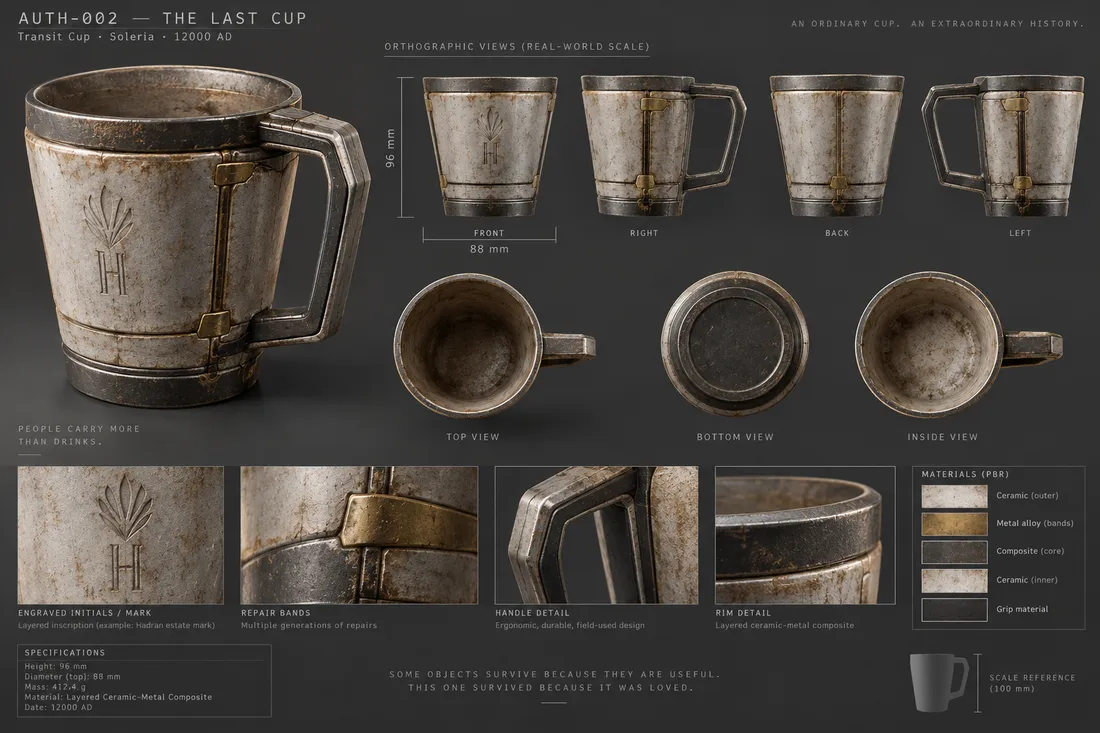
02 / PROCEDURE
Physical evidence leads outward: from the desk, to archives and claims, then back to a decision you have to own.
03 / DISPOSITION
Authorized actions
Classification is not decoration. A choice can return an object to a person, hold it away from them, preserve it for a civilization — or erase it from circulation.
04 / LIFE ON DECK 97
You still have to eat. You still get tired. Transit takes time. Pay arrives every three shifts, and rent is waiting at the end of the month.
After work, you decide what deserves the hours and credits you have left: go home, buy food, run an errand, help someone, follow a problem that has nothing to do with your job — or push yourself through one more task.
Deck 97 is not only about deciding what happens to an object. It is about living with the time, money, people, and consequences surrounding that decision.
Every three shifts
Credits become energy
Rest costs time
Going somewhere takes part of the day
Due at the end of the run
05 / STATION A
The station is larger than what you can reach.
Deck 97 is one small part of Station A, a vast orbital structure shaped by centuries of expansion, reuse, neglect, and necessity.
You do not explore the entire station freely. Your life moves through a limited network of places that matter to you: your apartment, your workplace, transit routes, shops, service areas, and the people who occupy them.
You feel the scale of the station through schedules, delays, notices, shortages, infrastructure failures, deliveries, rumours, and the objects that arrive for inspection from places you may never visit.
Some parts of Station A are familiar. Others exist only through paperwork, conversation, or the history of an object sitting on your desk.
Deck 97 is not about conquering a giant world. It is about living inside one.
06 / THE PROJECT
DECK 97 is an independent game in active development in Quebec. The project is currently self-funded and built from the ground up by a solo developer.
The current workstation and station images on this page are in-engine development captures. Some authored reference and concept material elsewhere on the site uses generative AI as temporary pre-production material, helping explore composition, mood and direction while the project does not yet have the budget to commission all of the art it needs.
The production goal is not to replace artists. A future crowdfunding campaign is intended in part to fund human illustration, visual development and other specialist creative work. AI may remain in the toolchain where it is useful, but as a multiplier of human talent — not a substitute for it. The finished game should feel made by people.
Final creative identity is led by people, their judgment and their individual styles.
Used selectively for exploration or workflow support, not as a reason to remove artists from production.
Part of the purpose of funding is to hire the specialists the project cannot currently afford.
07 / FIELD RECORDS
Current in-engine captures and station visual-development material. Art, interface and presentation may evolve during production.
08 / CASE FILE
AUTH-011 / THE SEED JAR
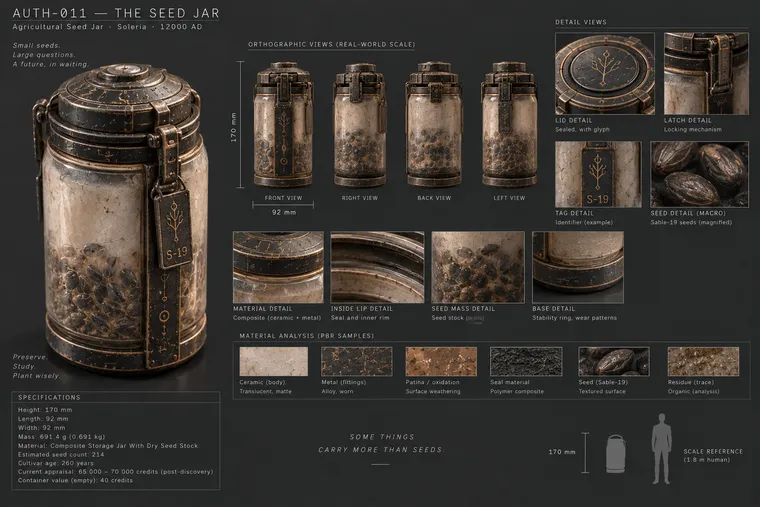
Which claim survives disposition?
Lost Property Division / Final disposition pending
DECK 97 is a premium PC game in development in Quebec. Inspect the object. Establish what happened. Decide where it belongs.